
Bananarchy

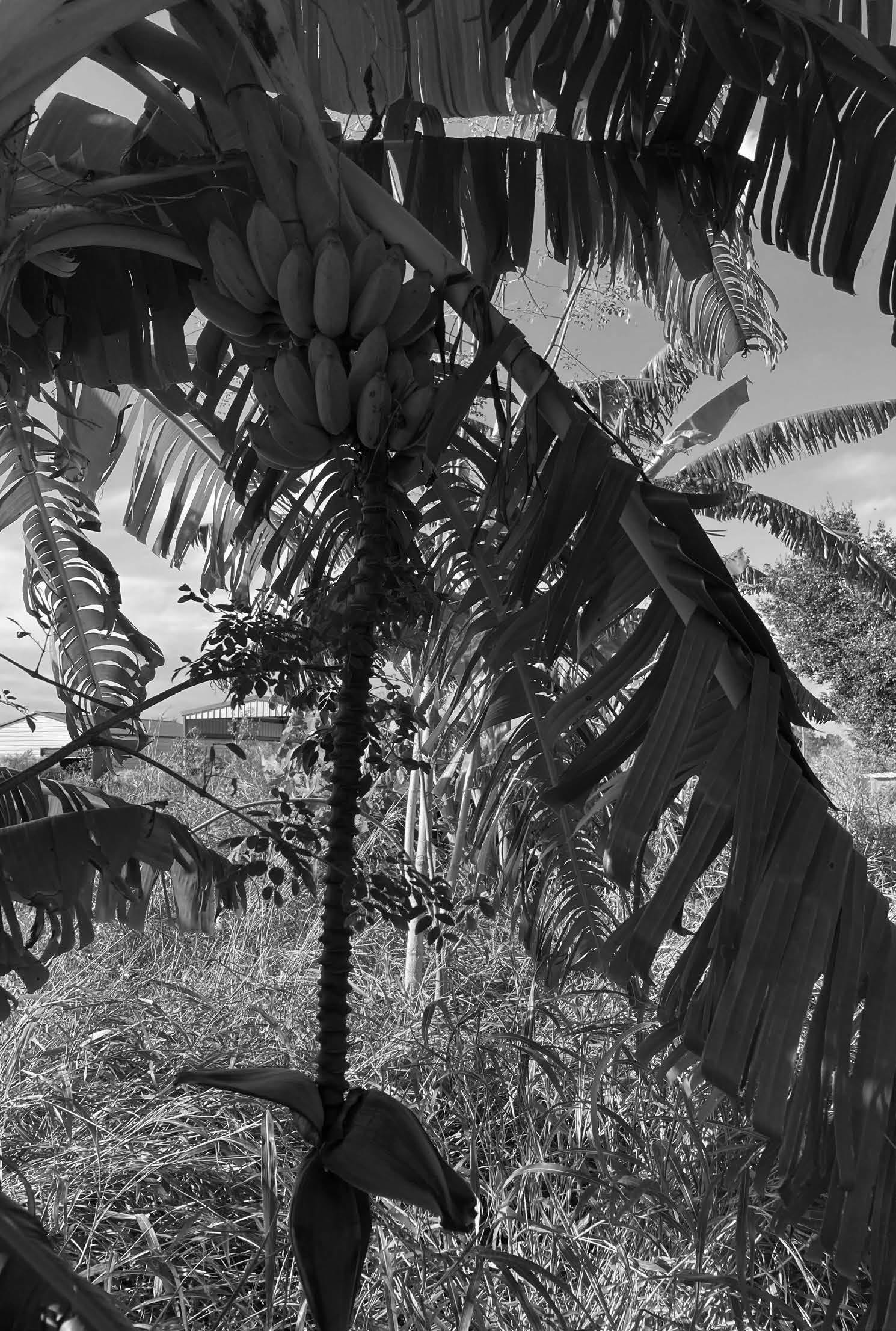
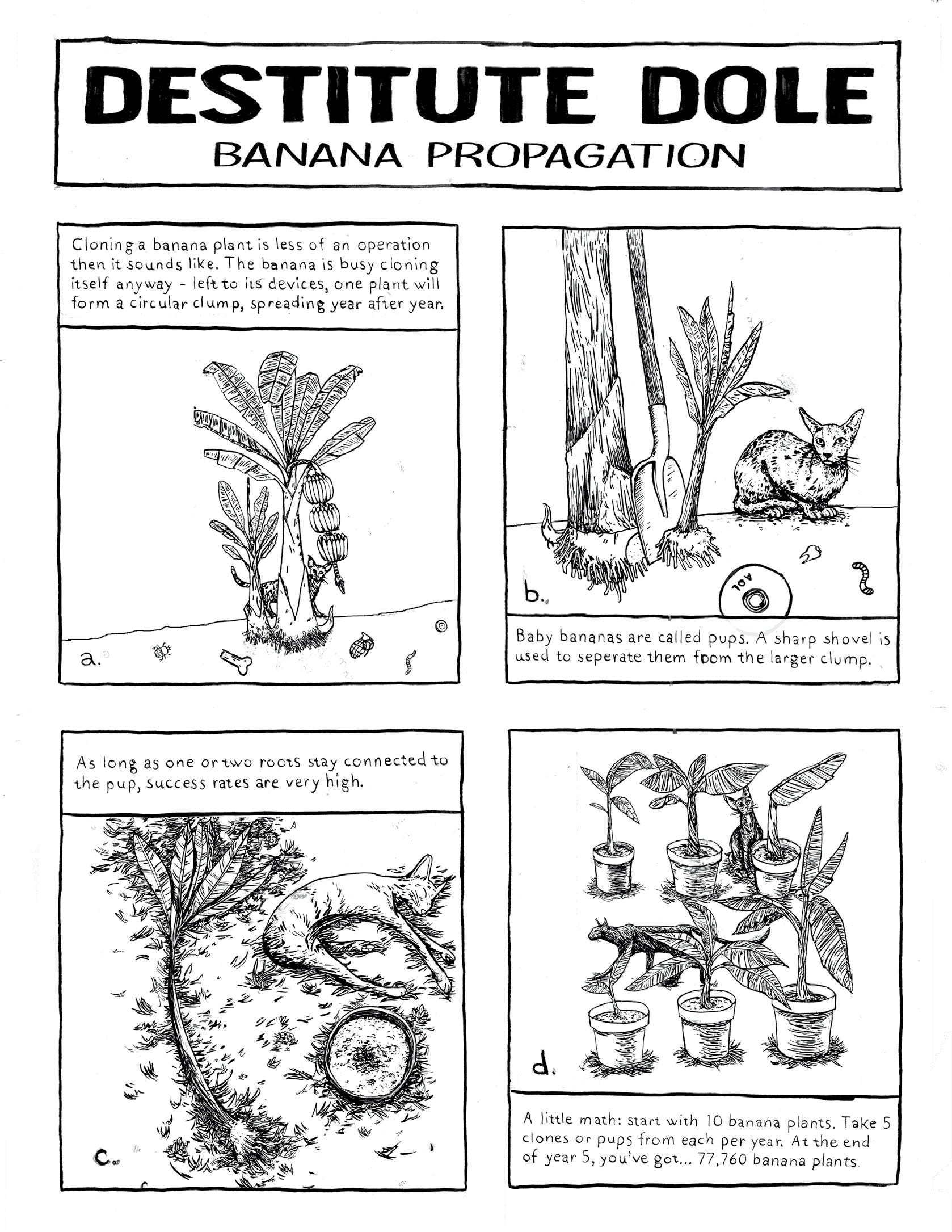
Cloning a banana plant is less of an operation that it sounds like. The banana is busy cloning itself anyways - left to its devices, one plant will form a circular clump, spreading year after year. Baby bananas plants are called pups. A sharp shovel is used to separate them from the larger clump. As long as one or two roots stay connected to the pup, success rates are very high. A little math: start with 10 banana plants. Take 5 clones or “pups” from each per year. At the end of year 5, you’ve got…77,760 banana plants.
Banana cultivation is currently possible in a narrow band along the US coast of the Gulf of Mexico. This band is growing. The Gulf South region of the US is becoming subtropical. At some point, large parts of Texas, Louisiana, Mississippi, Alabama & Georgia will experience freezing temperatures for the last time.
In 2011, a NASA computer model predicted that by 2100, 40 percent of land ecosystems would shift “from one major ecological community type — such as forest, grassland or tundra — toward another,” while essentially ALL land ecosystems will undergo significant changes in plant communities.
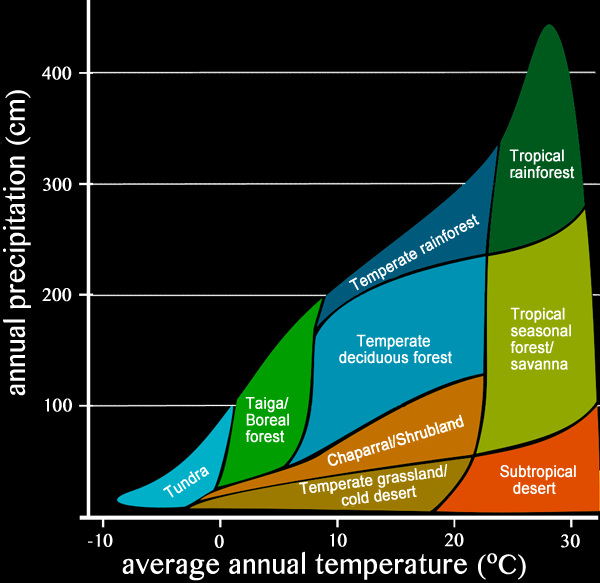
Plants do migrate naturally, but at varied rates. Without assistance, the slow ones, particularly trees, will disappear instead. That means we’re the ones who will decide whether our homes become deserts or forests. In this catastrophic era, the category of invasive species will be less relevant than that of refugee species.
We can imagine future solidarities that might develop. People in the mountains of a Caribbean island rush to gather seeds and cuttings from the jungle before the season of mudslides and hurricanes begins, sending them in care of migrants who sail past abandoned deepwater platforms in the Gulf and are welcomed at the shore by the keepers of another doomed forest. Mangroves sinking beneath the waves in the Yucatan go to the salt-sick ancient cypress swamps of the Atchafalaya Basin of Louisiana. Cypress seedlings are sent up the Mississippi to populate former corn fields in its expanded floodplain.
Our task is not to reconstruct the ancient forest nor to “design” the forests of the next century, but rather to support both native and migratory species as they adopt their own strategies for navigating this shift. Nor can a few specialist ecologists or state-run initiatives succeed in such a massive undertaking; it will only be possible if tree planting and forest stewardship become part of everyday life for millions of people. The process of planting the forest is also the process of becoming the people who live in the forest.
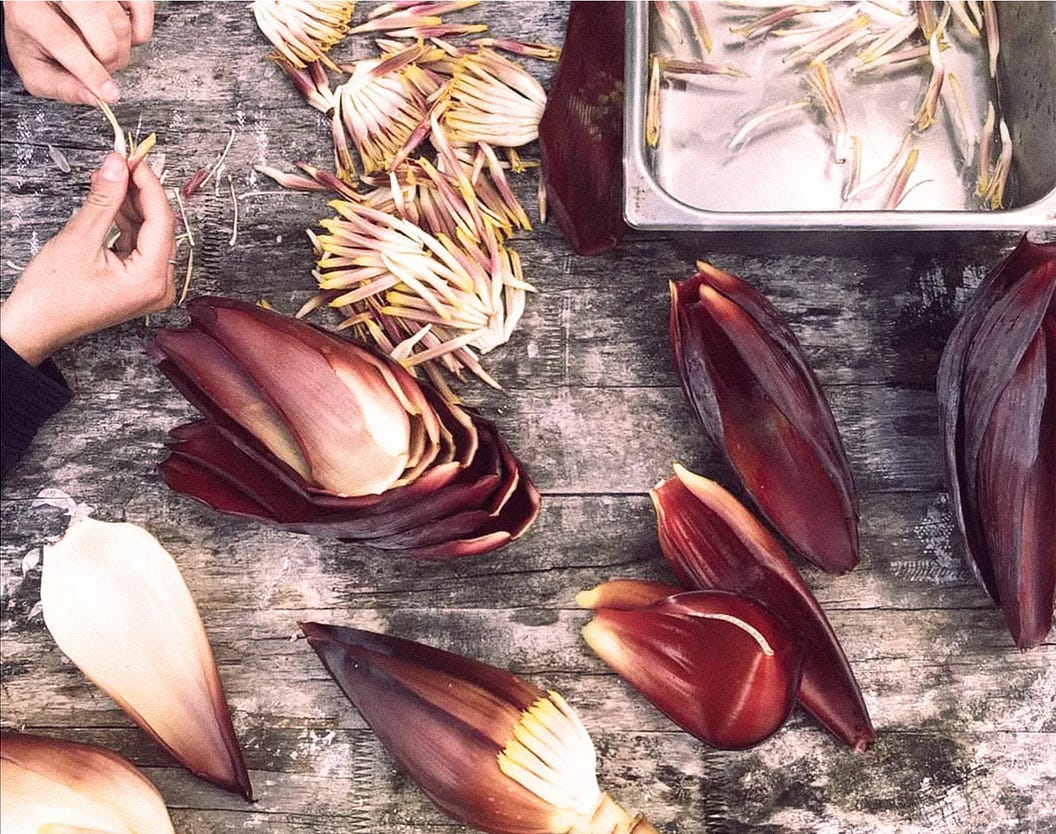
This brings us back to the banana, which presents itself as an ideal messenger species and vanguard of the coming subtropical forest. Its popularity is such that banana propagation could become a commonly held skill, and many varieties are cold hardy enough to survive freezing temperatures. In the hills of Georgia or the Piney Woods of East TX and western Louisiana, for example, banana plants grow well but don’t usually fruit due to winter freezes. Increasingly popular as ornamentals, their eventual fruits will bear undeniable truths about climate change.
The old adage “money doesn’t grow on trees” begs the question (since fruit does grow on trees) why isn’t fruit free? We could answer this question on many levels - historical, economic, cultural, spiritual. For our purposes, we’ll just point out that some of the world’s fruits are still free, going right from tree to mouth without ever becoming a commodity. For most people for most of history, food and other necessities have mostly been provided by the “ecological base” and not by a money economy. Those of us living inside the economy tend to treasure the few fragments of this lifestyle we have: blackberries gathered by the roadside, deer meat in the freezer from a family hunting trip, sweet potatoes from the garden.
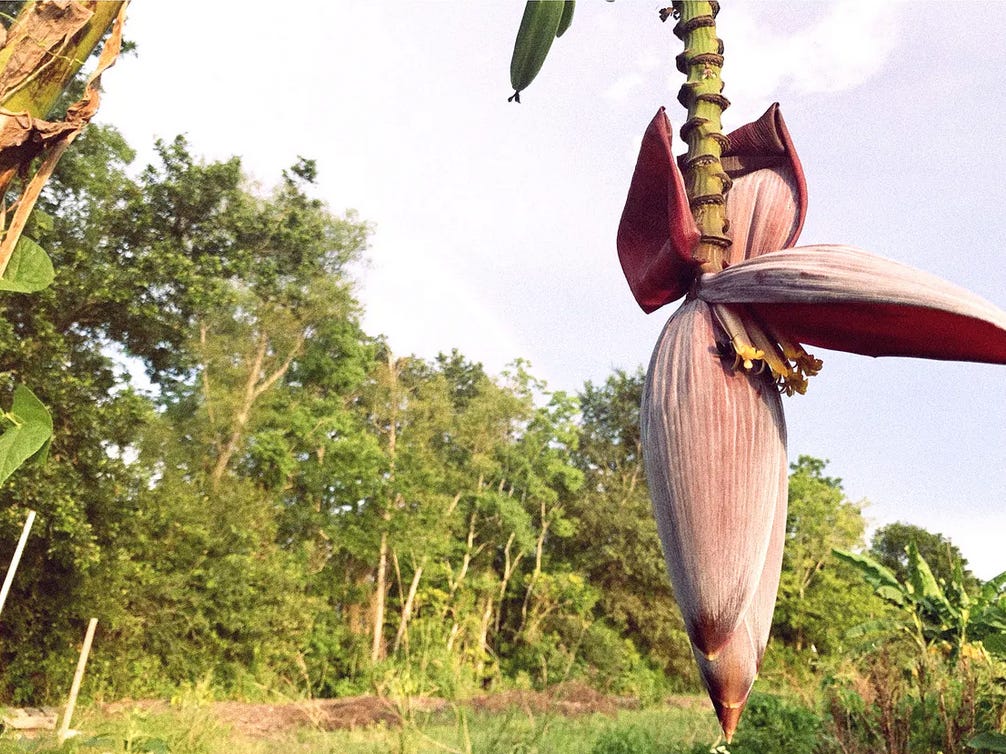
One way of looking at assisted migration of subtropical plants is as a way of cultivating a strong ecological base for ourselves and our descendants. To this end, we have been growing banana plants and gifting pups to anyone in the region who agrees to continue propagating and sharing them. Our goal to produce as many human-banana-plant interactions as possible and decentralize production to the extent that it is within everyone’s reach.
Follow our efforts online under the hashtags #Bananarchy and #DestituteDole. You can also contact any of these participating organizations to join the effort by receiving a free banana pup!
Bayou Food Forest: indianbayoufarm@protonmail.com,
@bayou_foodforest on Instagram
This piece appeared originally in the 2021 Earthbound Farmer's Almanac.
